If co-production is the way forward in an age of austerity – how can public sector, businesses and third sector organisations be asked to marshal their resources to their best effect?
 A seminar organised by the Institute for Local Governance, Teesside University Darlington, Vicarage Road, Darlington, Friday 15 July 2016, 9.30 – 1.00
Co-production means different things to different people – but in essence it encompasses notions of shared responsibility and shared benefit for the outcomes of action. This seminar is about the way that organisations from different sectors can engage in co-production including: local authorities, government, the private sector, the voluntary and community sector and universities.
The seminar builds upon all the other seminars which have taken place in this series on topics including: approaches to asset transfer, the implications of demographic ageing, young people’s life transitions, the impact of inward business investment; deprivation and welfare in rural areas, supporting carers, volunteering and civic action, and preventative interventions. All of these seminars have included discussion of partnership working towards shared objectives – but do they work as well as they should?
Partnership is a ‘warm’ word, evoking notions of shared values, common goals and equal voices. But the realities of partnerships can be different – and especially so when values are only partly shared, goals are contested and there are inherent imbalances of power amongst partners. So this seminar provides an opportunity to debate the value of partnership, when it works well, and to get a better understanding of what can make partnerships go wrong.
While formal partnership is one way forward and can work well, we will also discuss the scope for less formal complementary relationships amongst organisations. But it will also be necessary to recognise that some organisations will continue to work on their own (but not necessarily around the edges of all the others) so ways need to be considered to help them to be ‘good neighbours’.
To make the event work well, we particularly encourage people to attend who have already been to previous seminars so that we can collectively debate issues on some common ground – and then, following the seminar, a brief ‘think piece’ will be published to round off the seminar season and provide a basis for future debates about policy and practice.
The seminar will chaired by Professor John Mawson, Director, Institute for Local Governance and speakers at the seminar will include:
- Professor Tony Chapman, St Chad’s College, Durham University: on the underlying meanings of partnership, complementarity and autonomous working.
- Seth Pearson, Director, One Darlington Partnership: on the configurations of partnership working in Local Strategic Partnerships in changing policy regimes.
- Rowena Sommerville, Director, Tees Valley Arts: on the building of shared objectives for a City of Culture bid in a complex multi-sector and multi-local authority context.
- Dr Dave Vanderhoven, Department of Urban Studies and Planning, Sheffield University: on the role of universities in supporting the development of partnership and co-production initiatives in complex urban areas.
The seminar is free to attend, but places are limited and they tend to book up quickly, so please register your attendance via: Janet Atkinson, Institute for Local Governance, Durham University janet.atkinson@durham.ac.uk
The Institute for Local Governance is a North East Research and Knowledge Exchange Partnership established in 2009 comprising the North East region’s Universities, Local Authorities, Police and Fire and Rescue Services. Further information about the content of the event can be obtained by contacting:- tony.chapman@durham.ac.uk or john.mawson@durham.ac.uk.
Powerpoint slides from the seminar can be found here: ILG Seminar 15th July 2016 Darlington.

 The Programme Advisory Group assembled at St Chad’s College, Durham University on 28th July 2016 for its second meeting this year. The group includes representatives from IPPR\North, Community Foundation for Tyne & Wear and Northumberland, TSRC, VONNE, Greater Manchester Centre for Voluntary Organisation, Social Enterprise Coalition and Durham and Sheffield Universities.
 In North East England (funded by the Community Foundation for Tyne & Wear and Northumberland). Link to the survey questionnaire:

 A seminar organised by the Institute for Local Governance, Teesside University Darlington, Vicarage Road, Darlington, Friday 15 July 2016, 9.30 – 1.00
  y to those in need of care. We’ve been focusing, through seminars and discussions on the situation of a range of individual carers who give support to those in need, including neighbours and friends; young carers; older people providing care to spouses; people providing informal dementia care, amongst others. It must be recognised that such carers often achieve what they do with help from the many charities and community organisations which deliver support to carers.
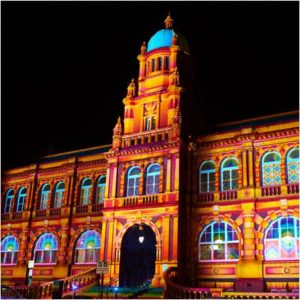 The report, by Gordon Allinson, Paul Braidford and Maxime Houston, which was received by the County Council earlier this year shows that the event generated almost a £10m boost to the regional economy. Furthermore, as the Leader of Durham County Council, Councillor Simon Henig, stated – “More than 90 per cent of those surveyed rated Lumiere 2015 as ‘excellent’ or ‘very good’ and it said it ‘made them happy with 80 per cent of visitors saying they planned to come back.” It is hoped that the Cabinet will approve investment of £100,000 in a future Lumiere on the basis of the benefits identified in the report. See the full story online in the Northern Echo, 8th June, 2016:
  undertaking his PhD at St. Chad’s College and Durham University Business School.
 Award to assist health organisations, local authorities and third sector organisations to develop complementary policy and practice strategies to improve public health and social wellbeing in North East England. Based on shared learning drawing on a parallel project, Keeping it Simple, health authorities will be encouraged to reflect upon and embed new ‘ways of thinking’ about their working relationships with external organisations working in the field of health, mental health and social care.
 serving natural ecosystems and promoting social equity’.