
A major new report on the Third Sector in Yorkshire and the Humber has been published by Policy&Practice on Monday 17th July 2017.
The Third Sector Trends study has been running in Yorkshire and the Humber since 2010. The first phase of the work, funded by Northern Rock Foundation established a baseline assessment of the size and structure of the sector. This work was carried out by NCVO and Southampton University.
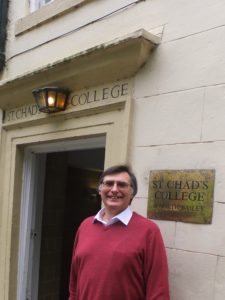
In 2013, Joseph Rowntree Foundation (JRF) funded a major survey of over 1,000 charities in the region in collaboration with Involve Yorkshire & the Humber and St Chad’s College, Durham University. A second phase of the work was undertaken in 2016, also by Professor Tony Chapman of St Chad’s College – again generously funded by JRF.
The results of the 2016 survey chart the progress the Third Sector has made over the last ten years in tackling key social, economic and environmental issues in the region.
The work runs alongside two other major studies in North West England, funded by Garfield Weston and IPPR North, and in the North East by Community Foundation Tyne & Wear and Northumberland who are now responsible for the legacy of the Northern Rock Foundation work and for the development of future iterations of the project.
The 2016 study report can be found here THIRD SECTOR TRENDS IN YORKSHIRE AND THE HUMBER 2016
The 2014 study report can be found Third Sector Trends in Yorkshire and the Humber May 2014
 ents in Durham University Business School.
 This is the first time in the project that public-sector organisations involved in the project have come together with other funding organisations, infrastructure bodies and practicing third sector organisations.
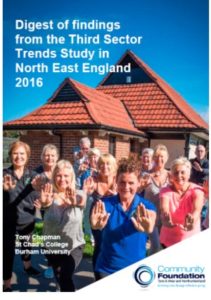 This report presents key findings from the Third Sector Trends study in 2016 from across Northern England and specifically in North East England and for each of its four sub-regions: Northumberland, Tyne and Wear, County Durham and Tees Valley. Key findings can be found in the
 A seminar organised by the Institute for Local Governance. It will take place at Teesside University, Vicarage Road, Darlington DL1 1DR on 23rd June 2017, 9.30 – 1.00
 s is right for graduates as well as for the region. The seminar will also focus on the quality of graduate employment in the region by identifying the extent of ‘under-employment’ of graduates and debating it’s consequences for the incumbents of such jobs and for the region more generally.

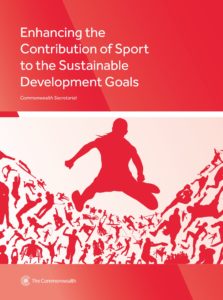 Two teams of experts and personalities drawn from across the Commonwealth will provide a reflective and entertaining debate on the motion: ‘Corruption in elite sport undermines the potential to promote development and peace through community sports’.