 People are often confused by the complexity of civil society. For example there are so many ways of describing what is sometimes known as the ‘third sector’, ‘voluntary, community and social enterprise sector’ or ‘civil society sector’. This problem is compounded when we try to define specific types of organisations. Community business is a case in point: how are these organisations defined, and how do they differ from others such as social enterprises or community or voluntary organisations?
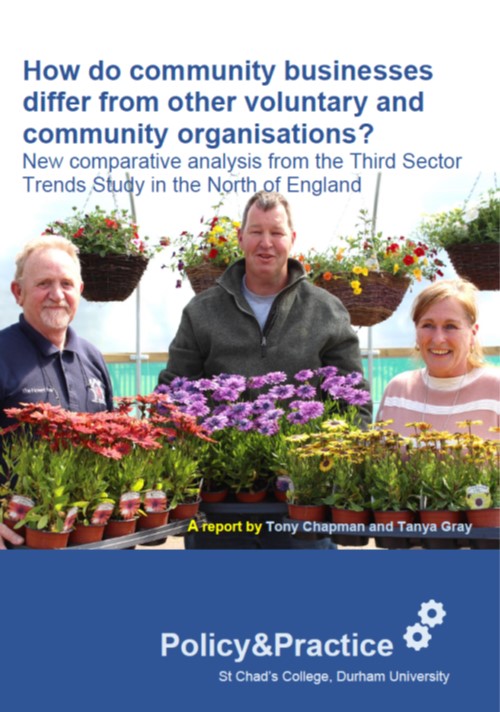
This new report looks at where community businesses sit within this wide range of organisational types and draws a distinction between them and other third sector organisations (TSOs) which engage in trading or those which have no reliance on earned income. to the report helps readers to recognise what is special about community businesses, how they contribute directly to their localities and what opportunities and challenges they face compared with other types of TSO.
The report presents data from the 2016 Third Sector Trends study which covers the whole of the North of England. It is a large long-running study with more than 3,500 responses of which 612 survey respondents (17% of the sample) were identified as community businesses. As a category of organisations, community businesses tend to be larger than other TSOs (60% have income over £100,000 compared with just 27% of general charities that earn some of their income). They tend to have been established more recently (47% since 2000 compared with 35% of general charities that earn income). Community businesses are more likely to work in urban areas, and particularly deprived urban areas.
Read the report: Community Business in the North of England (2018) Policy&Practice
A blog is also available from Power to Change and Policy&Practice By Suzanne Perry, Tony Chapman and Tanya Gray which can be located here
 In this hard-hitting paper, Tim Blackman, a serving Vice-Chancellor, calls for a much less hierarchical higher education sector. He shows how this will benefit students, the quality of learning and social mobility and, most importantly, he shows how to get there.
 As Policy&Practice gear up for the fifth wave of the Third Sector Trends study in 2019 across North East England, it is crucial to understand the link between the wellbeing of the charity sector and philanthropic giving.
 ntly published article in Discover Society, Professor Tony Chapman, Director of Policy&Practice, and Honorary Professor of Social Policy in the Department of Sociology summarises the pitfalls of focusing too much on individuals’ responsibility to commit to long-range social mobility at the expense of more proximate and realistic ambitions.
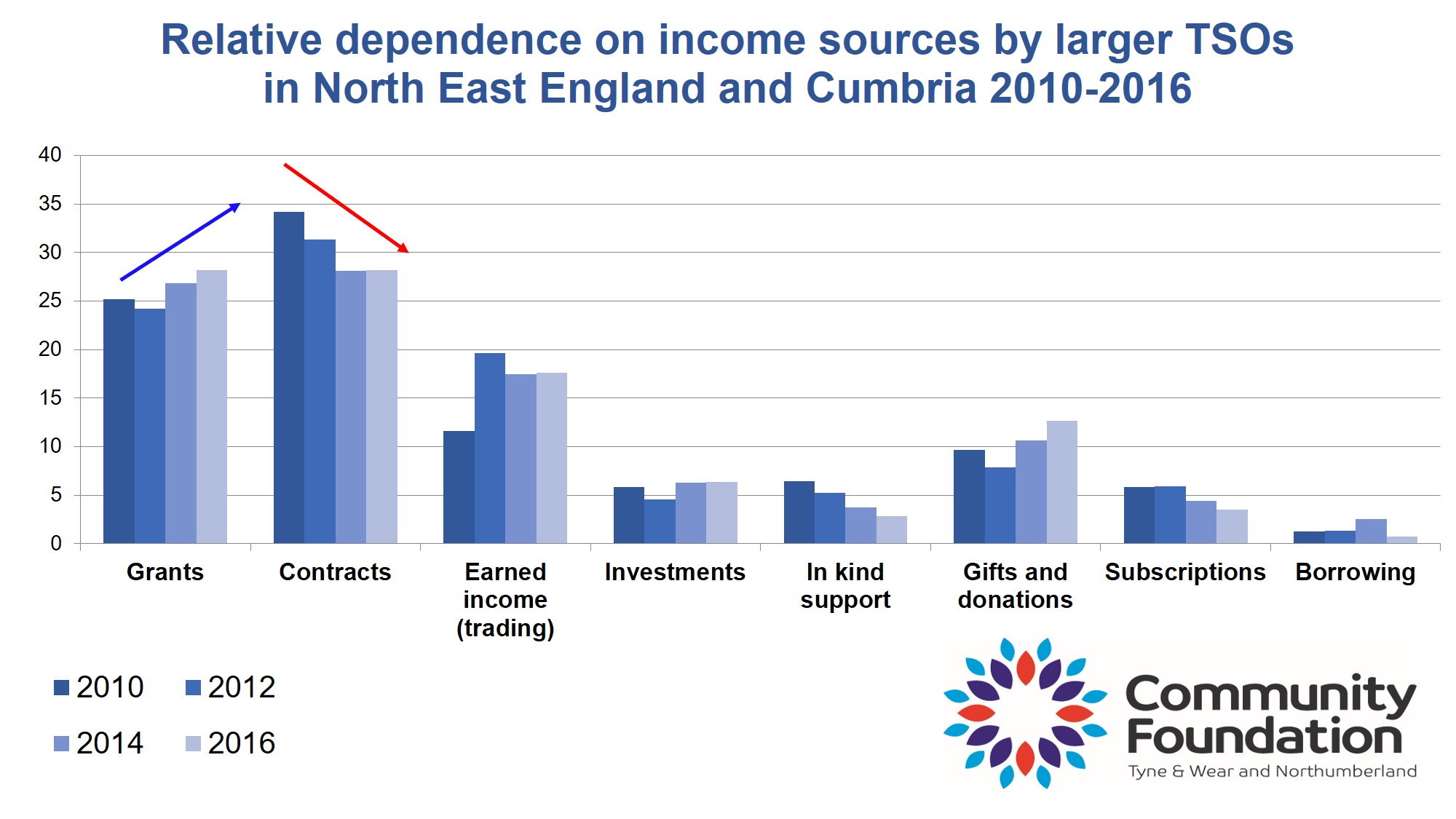
 & Wear and Northumberland has been running every two years since 2010. The survey of over 1,000 Third Sector organisations (TSOs), asks charity bosses to assess the value of different sources of funding in ‘relative’ terms – that is to tell us about the balance of reliance on different sources of income.