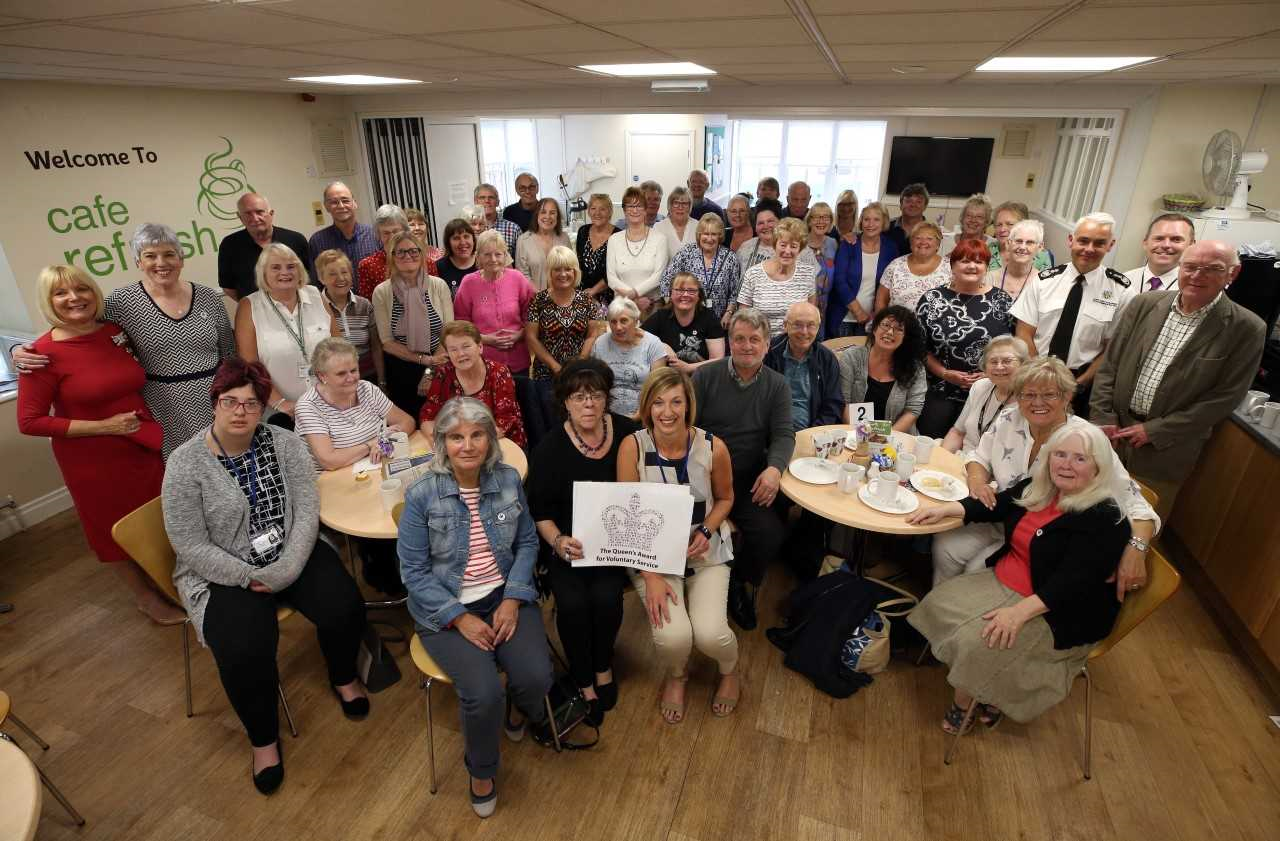
Policy&Practice has been commissioned by the Community Foundation serving Tyne & Wear and Northumberland to look at the way charitable foundations support the voluntary sector in the North East of England. The research has involved in-depth interviews with 25 regional and national charitable foundations and is concluding with seminars in Newcastle and London to test the findings from the research.
In recent years funding for the voluntary sector has remained fairly similar but its composition is changing – with a lower level of reliance on local and national government sources during a long period of austerity policy. Charitable foundations have often stepped in where social needs have been growing in areas such as homelessness, poverty, health and personal wellbeing. Reduction in funding for youth services by local councils has also led to higher levels of investment by charitable foundations.
The research is not just about where money from grants is flowing, Instead it is focusing on how charitable foundations determine what issues they want to support, how they know if their grant giving is making a real difference and how they work alongside each other to have a greater overall impact. Another key purpose of the exercise is to feed new questions in the forthcoming Third Sector Trends survey across the North beginning in June 2019.
Charitable foundations involved in the study include all Community Foundations serving Tyne & Wear and Northumberland, County Durham Community Foundation, Tees Valley Community Foundation, The Ballinger Family Trust, The Barbour Foundation, Big Lottery Fund, Children in Need, Comic Relief, Esmee Fairbairn Foundation, Garfield Weston Foundation, Greggs Foundation, The Henry Smith Charity, Joseph Rowntree Foundation, Lloyds Bank Foundation, Middlesbrough and Teesside Philanthropic Foundation, Millfield House Foundation, Northstar Ventures, The Pilgrim Trust, Power to Change, Sage Foundation, The Sainsbury Family Charitable Trusts, Sir James Knott Trust, The Tudor Trust, Virgin Money Foundation and Wolfson Foundation.
A report will be published in the late summer of 2019 on the research findings and further reports will emerge in 2020 using quantitative data from the Third Sector Trends surveys. For more information on the project, contact tony.chapman@durham.ac.uk.
 Many young people in County Durham are not achieving as much as they should as they make their journey towards adulthood. While much support is lent to young people to achieve their potential, it falls unevenly – too often being focused upon those who already have many advantages.
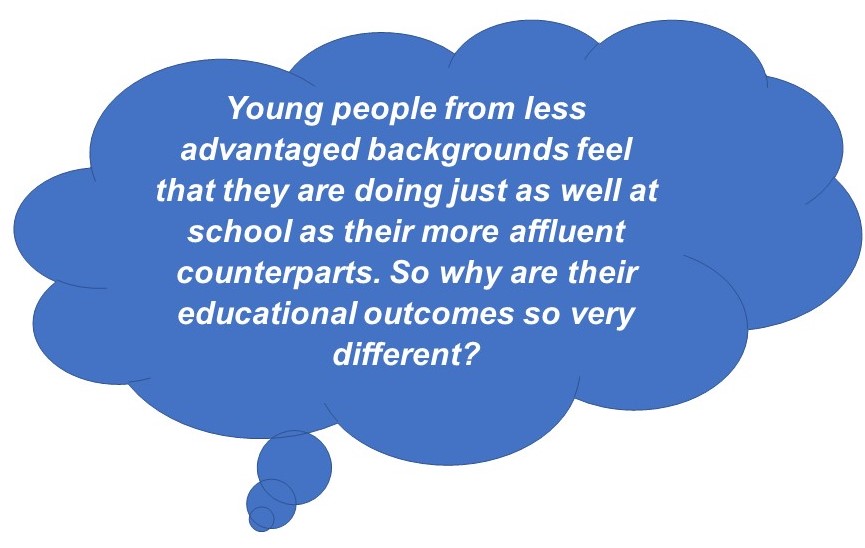 County Durham Economic Partnership commissioned research via the Institute of Local Governance, to start a debate in Durham on how to achieve more for young people from less advantaged backgrounds.
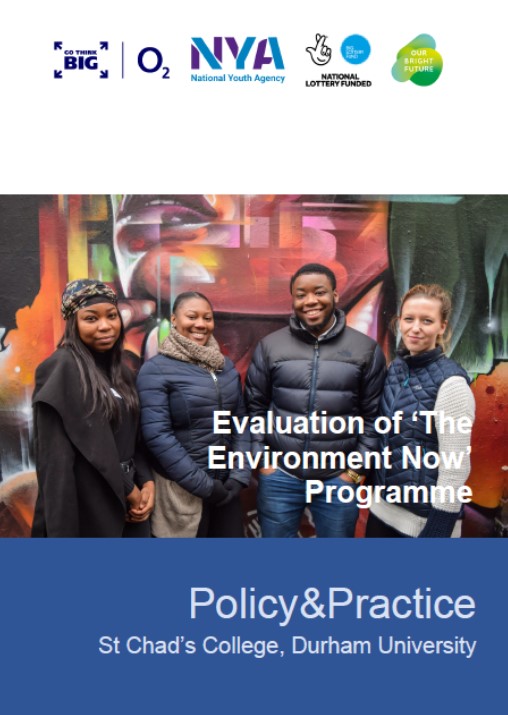 Our Bright Future allowed the NYA to to work intensively with young people over three years developing environmental projects. Funding was awarded to undertake 50 projects devised and run by young people who were, in turn, supported and trained through a comprehensive programme to develop their sustainability learning, employability skills, digital understanding and self-confidence.
 Several more reports have been published this year from the Third Sector Trends study – which will start its fifth round of surveys in 2018 – representing over ten years of intensive study. Two studies were published with IPPR North with groundbreaking data on the contribution of business to the third sector and on the value of volunteering to local charities. A study was also published on community business as a prelude for more intensive research in 2019 for Power to Change. The Third Sector Trends project, which covers the whole of the North of England has become increasingly influential on thinking about how best to support and fund charities in the North.
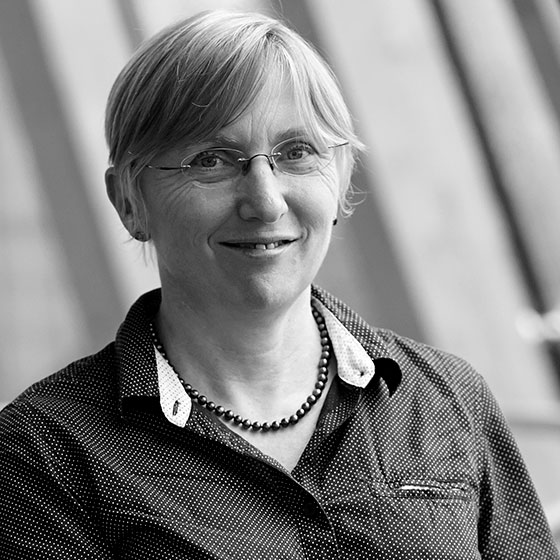 Professor Adams is an expert in integrated reporting, social and environmental accounting, sustainability reporting and developing strategy to address sustainable development. She is founding editor of the Sustainability Accounting, Management and Policy Journal and writes on her website at www.drcaroladams.net.
 Based on research findings from the Third Sector Trends study, the report recognises that the volume of voluntary activity in the north is enormous – about 930,000 people regularly volunteer and deliver over 76m hours of work.